
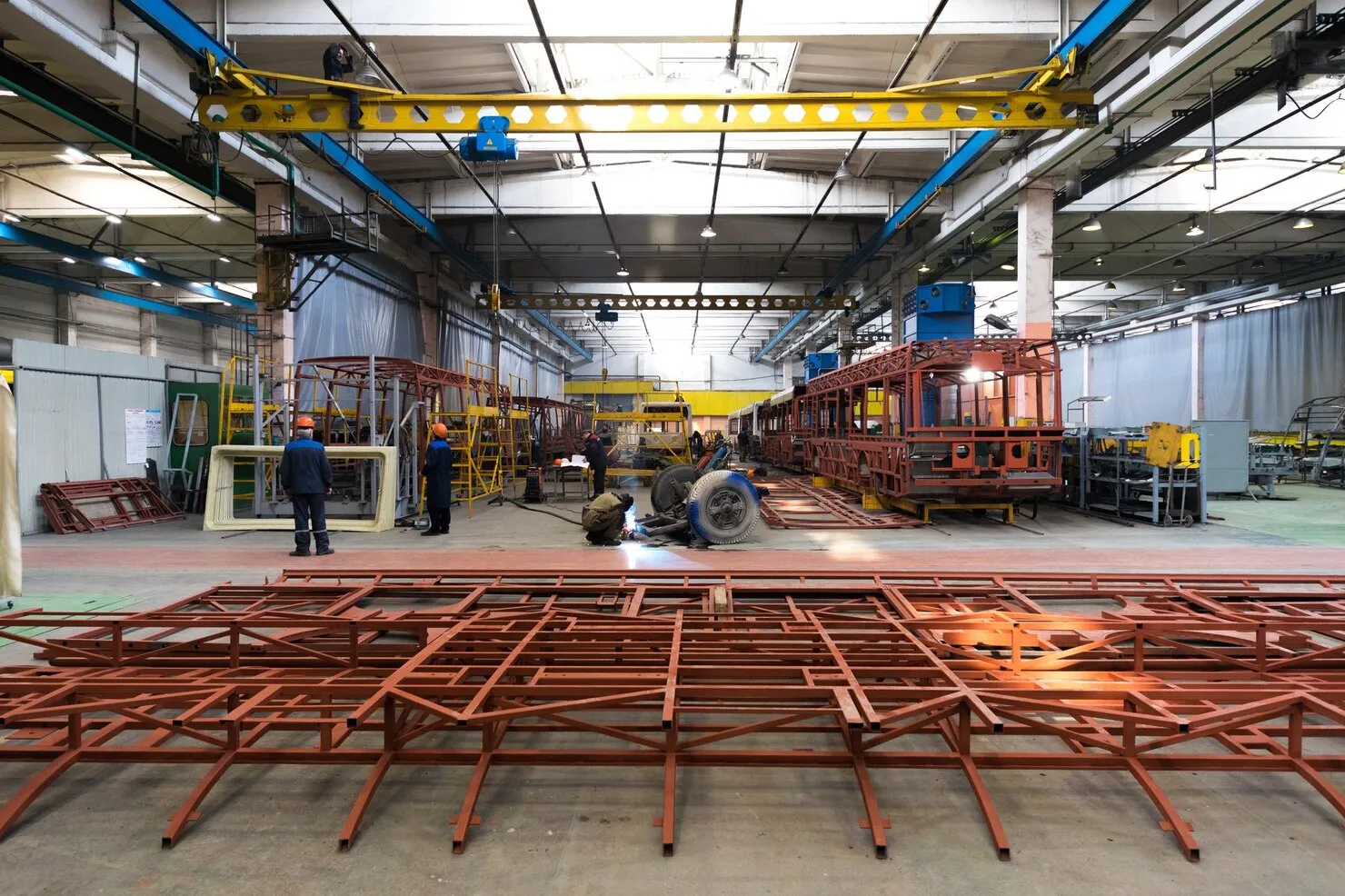
You’ve been there. A new PEMB project lands on your desk, and you know what’s coming—hours hunched over blueprints, squinting at scale rulers, punching numbers into spreadsheets. One wrong measurement, one missed connection, and your bid either loses the job or eats your profit. After 30 years in the field—from apprentice to general foreman to estimator—I’ve been there too. And I built a better way. Here’s what I’ve learned about estimating pre-engineered metal buildings accurately, and how you can win more work without losing sleep.
What Are Pre-Engineered Metal Buildings (PEMB)?
Pre-engineered metal buildings are steel structures designed and fabricated by manufacturers to specific dimensions and load requirements. Unlike conventional construction, these buildings arrive at your job site as a complete system—columns, rafters, purlins, girts, cladding, and all connection hardware—ready for erection. They’re the backbone of warehouses, industrial facilities, commercial spaces, and agricultural buildings across the country.
Why Accurate Estimating Matters
For steel erectors and contractors, accurate PEMB estimating isn’t just about winning bids—it’s about staying in business. Underestimate material quantities and you’re eating the cost. Overestimate labor and you lose to a sharper competitor. Miss a connection detail and your field crew burns hours waiting on parts. Accurate estimating protects your margins, builds client trust, and lets you bid with confidence.
1. Understanding PEMB Components
Before you can estimate anything, you need to know exactly what you’re estimating. Pre-engineered metal buildings are systems, and every component matters.
Main Parts of a Pre-Engineered Metal Building:
- Primary Framing: Rigid steel frames consisting of columns and rafters. These are the backbone of the structure, typically tapered or straight members that carry the main loads.
- Secondary Framing: Cold-formed C or Z sections used as purlins (roof) and girts (walls). These members support the cladding and transfer loads to the primary frame.
- Cladding: The roof and wall panels—usually corrugated steel—that enclose the building.
- Bracing Systems: Rods, cables, or angles that provide lateral stability. This is where many estimators miss quantities.
- Connections & Hardware: Anchor rods, bolts, clips, fasteners, and welding requirements. A single missing bolt count can throw off your entire bid.
- Trim & Flashing: Gutters, downspouts, base trim, ridge caps, and flashing around openings.
Why Knowing Components Improves Estimation Accuracy:
When you understand how these components work together in the field, you stop treating the blueprint as a puzzle and start seeing it as a construction sequence. You know that missing a brace rod means your crew stands around waiting. You know that undercounting purlin clips adds hours to the roof install. The best estimates come from estimators who’ve been on a beam—who know how the steel actually goes together.
2. Reviewing Drawings and Specifications
This is where most estimators rush—and where most errors begin. Your blueprint isn’t just a picture; it’s the manufacturer’s complete instruction set.
What to Look For in PEMB Drawings:
- General Notes: These contain critical information about anchor rod settings, bracing requirements, welding specifications, and erection tolerances.
- Framing Plans: Show the layout of columns, rafters, and secondary members. Pay attention to bay spacing and dimensions.
- Elevations: Provide height information, door and window locations, and wall girt spacing.
- Connection Details: These drawings show exactly how every beam, column, and brace connects. Don’t assume—verify.
- Anchor Rod Plans: Often buried in foundation drawings. Missing anchor rod quantities is one of the most common estimating errors.
- Specifications (Specs): Separate documents that define material grades, coating requirements, and installation standards.
Identifying Scope, Materials, and Project Requirements:
Read every page. Then read it again. Circle anything you don’t understand and get clarification before you start your takeoff. Scope creep kills estimates—know exactly what’s included in the manufacturer’s package and what falls on your crew. Is insulation included? What about crane systems? Mezzanines? The more you understand upfront, the fewer surprises on bid day.
3. Performing Accurate Quantity Takeoff
This is the heart of your estimate. Your material takeoff determines everything that follows—costs, labor, equipment, and timeline.
Measuring Steel Quantities:
Start with primary framing. Count every column, rafter, and endwall frame. Then move to secondary members—purlins, girts, eave struts. Track linear footage and weight. Then account for all connections, clips, and fasteners. A systematic approach—frame by frame, bay by bay—prevents missing sections.
Using Digital Tools for Faster and More Precise Takeoffs:
Manual takeoffs are painfully slow and error-prone. Digital takeoff software lets you measure directly from PDF plans, count components automatically, and track quantities in real time. The difference is night and day. What took me hours with a scale ruler now takes minutes with the right tools. And the accuracy? It’s not even close. Digital tools eliminate the math errors, misreads, and double-counts that plague manual estimates.
4. Calculating Costs and Labor
Material quantities are just the starting point. You need to translate those numbers into dollars—and understand what it will actually cost to put that steel in the air.
Material Costs:
Start with the manufacturer’s price for the PEMB package. Then add freight—this can be a significant line item, especially for large buildings or remote sites. Don’t forget anchor rods, embed plates, and any field-supplied materials.
Labor Costs:
This is where field experience pays off. Estimate crew size and man-hours based on building complexity, not just square footage. Consider:
- Size and weight of primary members
- Number of connections per frame
- Complexity of bracing and trim
- Roof slope and height
- Number of openings (doors, windows, louvers)
Equipment:
Crane requirements dominate equipment costs. How many cranes? What capacity? How many lifts? Add rigging, forklifts, scissor lifts, and any specialty tools.
Overhead and Profit Margins:
Don’t forget your indirect costs: supervision, project management, insurance, bonds, permits, engineering stamps, temporary utilities, and site access. Apply your markup after all direct costs are accounted for.
Adding Overhead and Profit Margins:
A common mistake is applying margin too early or too late. Calculate your total direct costs first, then add overhead allocation, then profit. This ensures you’re actually making money on every job, not just covering costs.
5. Using Digital Estimating Tools
I spent too many years doing estimates the hard way. Spreadsheets, calculators, hand-written notes—it worked, but it was slow and stressful. When I finally went digital, everything changed.
Benefits of Software Over Manual Methods:
- Speed: Complete a takeoff in hours instead of days.
- Accuracy: Eliminate manual math errors and misreads.
- Consistency: Every estimate follows the same proven process.
- Scalability: Bid on more projects without hiring more estimators.
- Professionalism: Deliver detailed, polished bids that impress clients.
Faster, More Accurate, and Scalable Estimating:
That’s why I built the Metal Building Bid Wizard (MBBW) —the only estimating software created by a steel erector for steel erectors. It’s designed specifically for PEMB projects, with digital takeoff tools, labor and equipment calculators, and bid preparation features that save time and reduce errors. Over 400 contractors across the country have already made the switch. They’re bidding faster, winning more work, and sleeping better at night.
Conclusion
Accurate pre-engineered metal building estimating comes down to three things: knowing the components, having a systematic process, and using tools that work the way you work. When you understand what you’re bidding—truly understand it, from the anchor rods to the ridge cap—you eliminate the guesswork that kills margins.
If you’re tired of late nights with spreadsheets and the constant worry about missed items, there’s a better way. The Metal Building Bid Wizard was built by someone who’s been in your boots—who knows what it takes to estimate and erect these buildings.
Ready to transform your PEMB estimating? Request a demo of the Metal Building Bid Wizard today and join the 400+ contractors who estimate with confidence.